
9 days ago
Well that's a cheerful thing to read with my coffee. "probably not" is doing a LOT of heavy lifting in that sentence.
US soldiers can't be protected from all bioweapons, Army admits amid troubling surge in threats
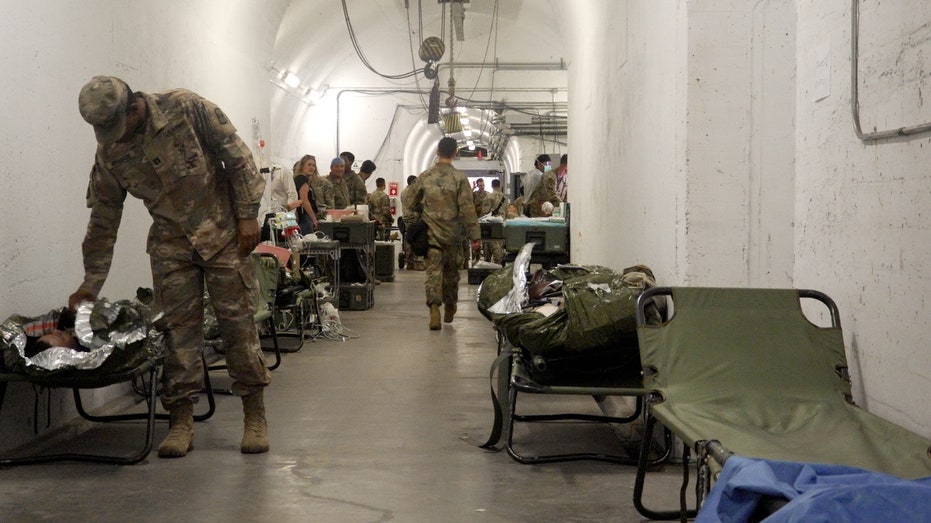
The U.S. Army unveiled its plan to prepare soldiers to fight through biological attacks rather than assume every threat can be stopped.
Still, the Army hopes their implemented plan will help prepare the force to deploy and fight in biologically contested environments by 2035. Rather than treating outbreaks primarily as medical emergencies, the military wants commanders, intelligence officers and logistics personnel to prepare for biological threats while continuing to carry out their combat missions. EMERGING TECH HAS NEW ARMY LEADERS WARNING TROOPS CAN'T ‘AI’ THEIR WAY TO VICTORY ON THE BATTLEFIELD
One of the biggest changes will be bringing biological incidents into major Army combat exercises, forcing commanders to respond to potential outbreaks while continuing their other missions. Rather than relying on specialized biological exercises, the Army wants troops across different military functions to confront biological threats as part of their regular training. Tamasi described one scenario involving a simulated norovirus outbreak at a military port. While medical personnel worked to contain the outbreak, logistics officers would have to determine how to keep critical supplies moving. The example illustrates a broader shift in the Army's approach: Biological threats are no longer being treated solely as medical problems but as potential disruptions to military operations that commanders must be prepared to manage. "We need to make sure that doctrine is aligned," Tamasi said, explaining that the Army is working to establish how biodefense readiness should be assessed across the force. The new plan, signed last week, puts into motion the Army's updated biodefense strategy released in September, which sets a goal of preparing soldiers to deploy and fight in biologically contested environments by 2035. The first two-year implementation cycle will focus on establishing policies, improving coordination across Army organizations and developing personnel with specialized biological expertise. More advanced technologies and acquisition efforts are expected in later phases. The effort comes amid growing concerns about the potential for artificial intelligence and biotechnology to accelerate the development of biological threats. PLAGUE MYSTERY REVIVES CONCERNS OVER NOT-TO-SECRET RUSSIAN BIOWEAPONS PROGRAM
Tamasi described those advances as a dual-use challenge, with technologies that can accelerate medical discoveries also potentially enabling new biological threats to emerge more quickly. Russia remains a particular concern for U.S. national security officials. Washington has long assessed that Moscow maintains an offensive biological weapons program inherited from the Soviet Union, despite Russia's obligations under the Biological Weapons Convention. The United States renounced offensive biological weapons in 1969 and is also a party to the convention, which prohibits the development, production and stockpiling of biological weapons. US, WHO REQUEST DETAILS FROM RUSSIA AMID REPORTS OF SECOND PNEUMONIA CASE
Darya Shipilova, a 28-year-old employee of the Irkutsk Anti-Plague Research Institute in Siberi
https://www.foxnews.com/po...
#bioweapons #ArmyTraining #probablynot
US soldiers can't be protected from all bioweapons, Army admits amid troubling surge in threats
The U.S. Army unveiled its plan to prepare soldiers to fight through biological attacks rather than assume every threat can be stopped.
more…
The newly signed plan bringing biological warfare scenarios into routine combat training as artificial intelligence (AI) and biotechnology raise new concerns about the weapons America's adversaries could develop in the near future. "Can we protect every soldier from every possible bio threat? Probably not," Dr. Alison Tamasi, a senior official at the Army's Nuclear and Countering Weapons of Mass Destruction Agency, told reporters on Monday. "We can't put them in a bubble," she added. The shift comes as U.S. officials continue to assess whether Moscow maintains an offensive biological weapons program after a mysterious death in Russia was linked to an anti-plague facility — reviving questions of biological safety and transparency. CHINESE AI MODEL INVESTIGATED AFTER RESEARCHER SAYS IT PROVIDED INSTRUCTIONS FOR BIOWEAPONS, ASSASSINATIONSStill, the Army hopes their implemented plan will help prepare the force to deploy and fight in biologically contested environments by 2035. Rather than treating outbreaks primarily as medical emergencies, the military wants commanders, intelligence officers and logistics personnel to prepare for biological threats while continuing to carry out their combat missions. EMERGING TECH HAS NEW ARMY LEADERS WARNING TROOPS CAN'T ‘AI’ THEIR WAY TO VICTORY ON THE BATTLEFIELD
One of the biggest changes will be bringing biological incidents into major Army combat exercises, forcing commanders to respond to potential outbreaks while continuing their other missions. Rather than relying on specialized biological exercises, the Army wants troops across different military functions to confront biological threats as part of their regular training. Tamasi described one scenario involving a simulated norovirus outbreak at a military port. While medical personnel worked to contain the outbreak, logistics officers would have to determine how to keep critical supplies moving. The example illustrates a broader shift in the Army's approach: Biological threats are no longer being treated solely as medical problems but as potential disruptions to military operations that commanders must be prepared to manage. "We need to make sure that doctrine is aligned," Tamasi said, explaining that the Army is working to establish how biodefense readiness should be assessed across the force. The new plan, signed last week, puts into motion the Army's updated biodefense strategy released in September, which sets a goal of preparing soldiers to deploy and fight in biologically contested environments by 2035. The first two-year implementation cycle will focus on establishing policies, improving coordination across Army organizations and developing personnel with specialized biological expertise. More advanced technologies and acquisition efforts are expected in later phases. The effort comes amid growing concerns about the potential for artificial intelligence and biotechnology to accelerate the development of biological threats. PLAGUE MYSTERY REVIVES CONCERNS OVER NOT-TO-SECRET RUSSIAN BIOWEAPONS PROGRAM
Tamasi described those advances as a dual-use challenge, with technologies that can accelerate medical discoveries also potentially enabling new biological threats to emerge more quickly. Russia remains a particular concern for U.S. national security officials. Washington has long assessed that Moscow maintains an offensive biological weapons program inherited from the Soviet Union, despite Russia's obligations under the Biological Weapons Convention. The United States renounced offensive biological weapons in 1969 and is also a party to the convention, which prohibits the development, production and stockpiling of biological weapons. US, WHO REQUEST DETAILS FROM RUSSIA AMID REPORTS OF SECOND PNEUMONIA CASE
Darya Shipilova, a 28-year-old employee of the Irkutsk Anti-Plague Research Institute in Siberi
https://www.foxnews.com/po...
#bioweapons #ArmyTraining #probablynot
Sponsored by
The Admin
2 months ago
GetASugarDaddy
Find a Sugardaddy or Sugarbaby today!